Not every foundation crack is a foundation problem — and the difference matters to your wallet. Poured concrete shrinks as it cures, so a hairline vertical crack in a Wichita basement wall is often just the house's birthmark. But the same crack, once Kansas groundwater finds it, becomes a leak with every rain, and a crack that is wide, offset or growing is the wall reporting movement. Crack repair done right starts with telling those apart.
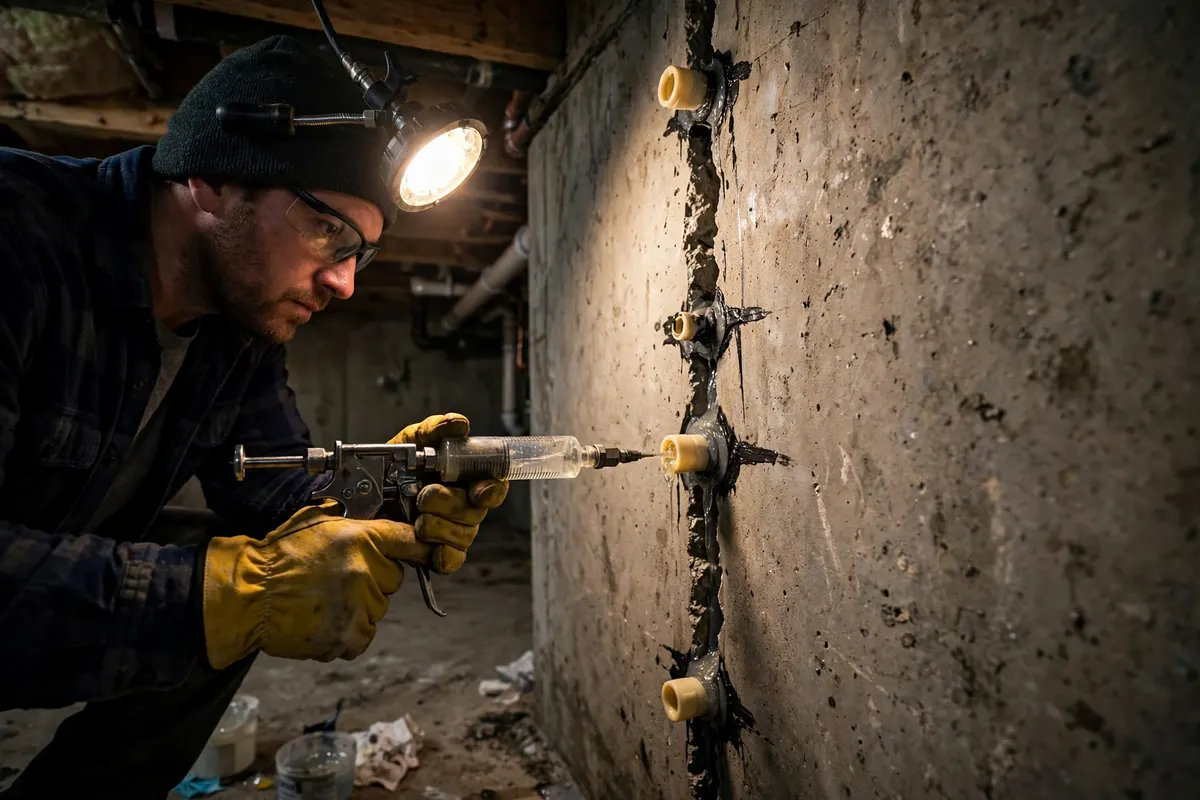
Technician injecting epoxy into a vertical crack in a poured concrete basement foundation wall in Wichita KS.
Wichita Foundation Repair seals non-structural cracks by low-pressure injection — epoxy for strength where the wall needs it, polyurethane foam where active water needs stopping — filling the crack through the full thickness of the wall, not smearing sealant on the surface where it fails in a season. And when the crack is telling a structural story, we will show you the measurements and talk about piers instead of selling you a tube of sealant.
Which Cracks Need Repair — And Which Need Watching
A crack that leaks
Any crack that admits water — even a damp stripe after rain — is open through the wall and will only widen its plumbing. Injection seals it full-depth and ends the leak at the source instead of managing it with a channel and a pump forever.
Width over about 1/4 inch
Hairlines (under 1/16 inch) are usually shrinkage. Cracks approaching or past 1/4 inch, or noticeably wider at the top or bottom, suggest the wall sections are moving relative to each other — worth measuring before sealing.
Offset — one side higher than the other
Run a fingertip across the crack: if one side sits proud of the other, the wall has shifted, not just split. Offset cracks get an inspection first; sealing a moving crack without stabilizing it just schedules the next crack beside it.
Stair-step cracks in block walls
In concrete-block foundations, cracks that step through the mortar joints mean a section of wall is dropping or being pushed. The mortar is the weak link, and the pattern is the diagnosis — this is movement, and it gets measured.
Horizontal cracks in a block wall
A horizontal crack — especially with the wall bowing inward — is soil pressure winning against the wall. Expansive Wichita clay pushes hardest when it is wet and swollen. This is the one crack pattern we treat as urgent: walls like this can fail, and they get braced or rebuilt, not injected.
A crack that grows season to season
Mark the ends of a crack with pencil and date it. If the marks keep getting passed — especially growing in dry summers and pausing in wet springs — you are watching the clay cycle work. Growing cracks get an inspection, and usually a pier conversation.
How We Repair a Foundation Crack — Our 5-Step Process
1
Assess first — structural or not
We measure the crack, check it against floor elevations and the rest of the house, and tell you plainly which kind it is. Non-structural cracks proceed to injection; structural ones get a repair plan for the cause, with the crack sealed as part of it.
2
Prepare the crack and set ports
The surface is cleaned, injection ports are bonded along the crack at close intervals, and the surface between ports is sealed so the resin is forced through the wall's full thickness instead of leaking out the face.
3
Inject epoxy or polyurethane, low pressure
Epoxy restores structural continuity in dry, stable cracks. Expanding polyurethane is the choice for actively leaking cracks — it chases water, fills voids and stays flexible. Injection proceeds port to port until resin shows at the next port, proof the section is full.
4
Cure, strip and finish
After curing, ports and surface seal are removed and the wall is dressed smooth. The repair is nearly invisible — a thin line where the crack was — and the wall can be painted or finished over.
5
Document and set monitoring where needed
You get photos of the repair and, where the crack had any movement history, simple monitoring points and a recheck interval — so if the wall ever moves again, we both know it early and from evidence.
What Does Foundation Crack Repair Cost in Wichita, KS?
Published cost guides put professional crack injection most often between about $250 and $800 per crack, depending on length, thickness of the wall and whether water is actively coming through. That sits at the small end of the overall foundation repair range ($2,225–$8,133 for a typical job) — because a sealed crack is a small job, when a sealed crack is all the house needs.
The expensive mistake is not the injection; it is injecting a structural crack and paying twice — once for the seal, once for the piers that were always coming. That is why our assessment comes first and is free: if the crack is cosmetic, you pay for a crack repair. If it is movement, you pay for the fix once, and the sealing rides along inside that scope.
Why Wichita Homeowners Choose Wichita Foundation Repair
Crack repair is the easiest place in this trade to take a homeowner's money dishonestly — seal everything, say nothing, let the piers sell themselves next year. We do the opposite: the assessment is free, the measurements are yours, and when the answer is 'just a shrinkage crack,' we will happily take the small job and the good review instead of inventing a big one.
Our injection work is full-depth and warranted against leaking. Surface smears and hardware-store kits fail because they bridge the face of the crack while the wall behind stays open; pressure injection through ports fills the crack through the entire wall thickness, which is the only version of this repair that stays repaired through Wichita's wet-dry seasons.
For a dry hairline you are watching, a surface seal is a reasonable temporary step — but it does not fill the crack through the wall, and it hides the crack from future inspection. For any crack that leaks, is wide, offset or growing, get it assessed first; injection is a modest professional cost compared with repairing water damage later.
Epoxy or polyurethane — which does my crack need?
Dry, stable cracks that should regain strength get epoxy. Actively leaking cracks get polyurethane foam, which reacts with water, expands into voids and stays flexible. Many walls get both in different places. The assessment decides, and we explain the choice on your wall, not from a script.
Will the crack come back after injection?
A properly injected crack in a stable wall stays sealed — the resin is stronger than the surrounding concrete. If the wall is still moving, new cracks can form beside the repair, which is why structural movement is stabilized first. Our leak repairs are warranted, and monitoring points catch any renewed movement early.
How long does crack injection take?
A typical single crack takes one to two hours including setup and cleanup, and the basement stays usable throughout. Multiple cracks or a crack plus drainage work may take a day. You can be in the space the same evening.
Does a repaired crack hurt my home's value?
A documented professional repair usually helps: Kansas sellers disclose known foundation issues, and a warranted injection with paperwork reads as maintenance. An undisclosed, actively leaking crack found at inspection is what hurts value — it invites the buyer to imagine piers. Paperwork beats imagination.
Need Foundation Crack Repair in Wichita?
On Wichita clay, foundation movement does not stop on its own — it pauses in wet months and advances in dry ones. A free inspection with floor-elevation readings tells you exactly where your home stands and what, if anything, it needs. No pressure, no obligation.